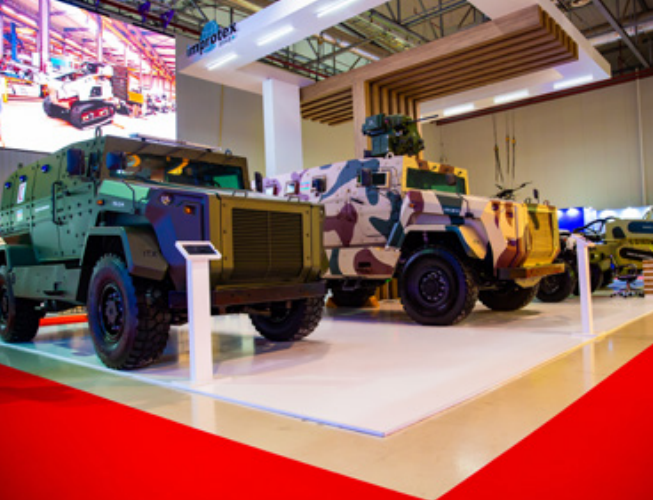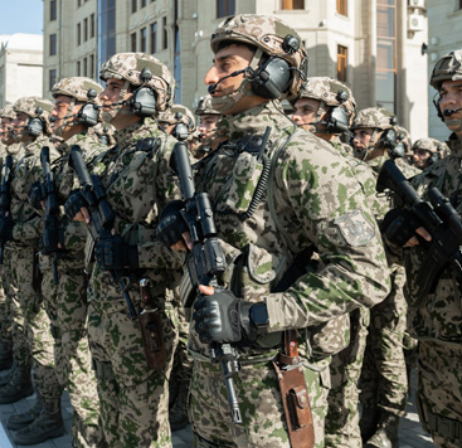
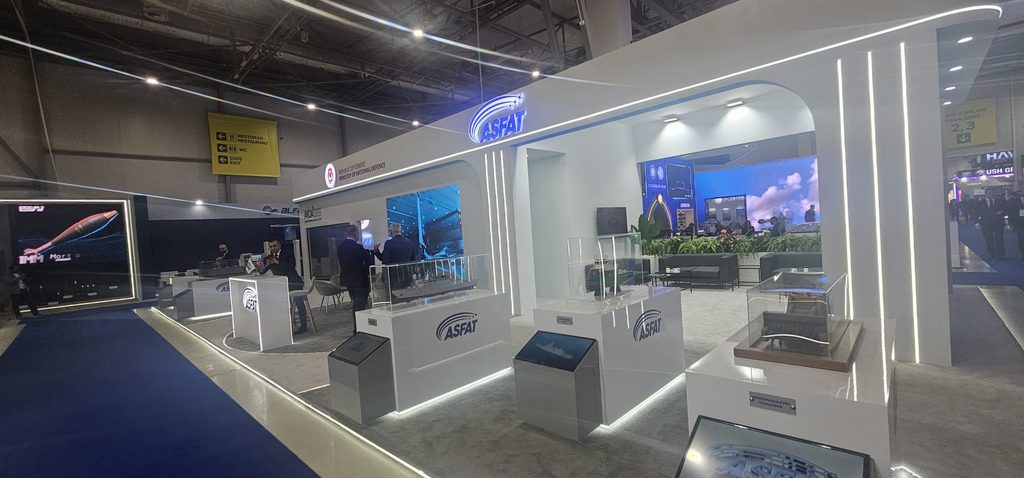
ASFAT has brought to ADEX 2026 a broad portfolio spanning naval platforms, unmanned systems, mine clearance and sustainment infrastructure, with an emphasis on requirements in Azerbaijan and the wider Caspian region.
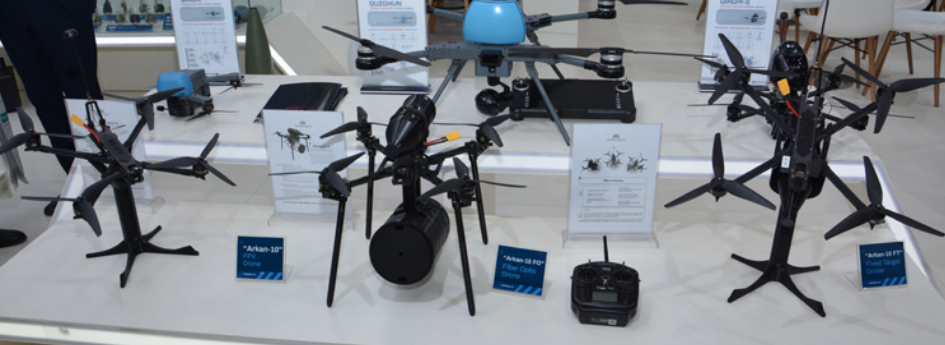
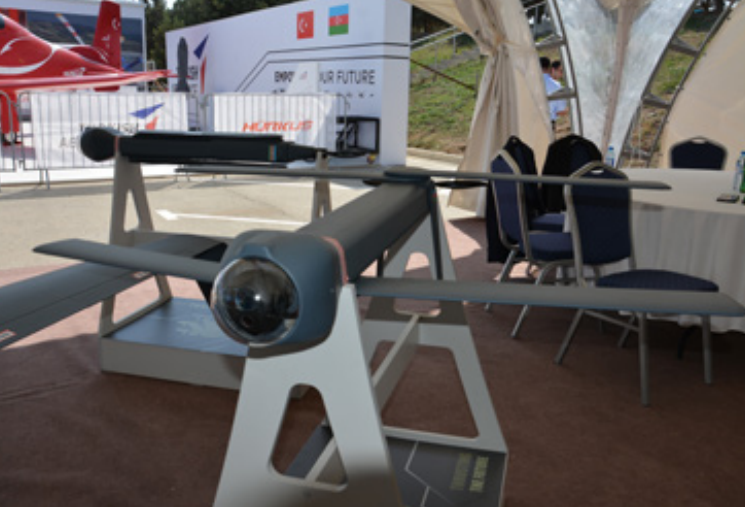
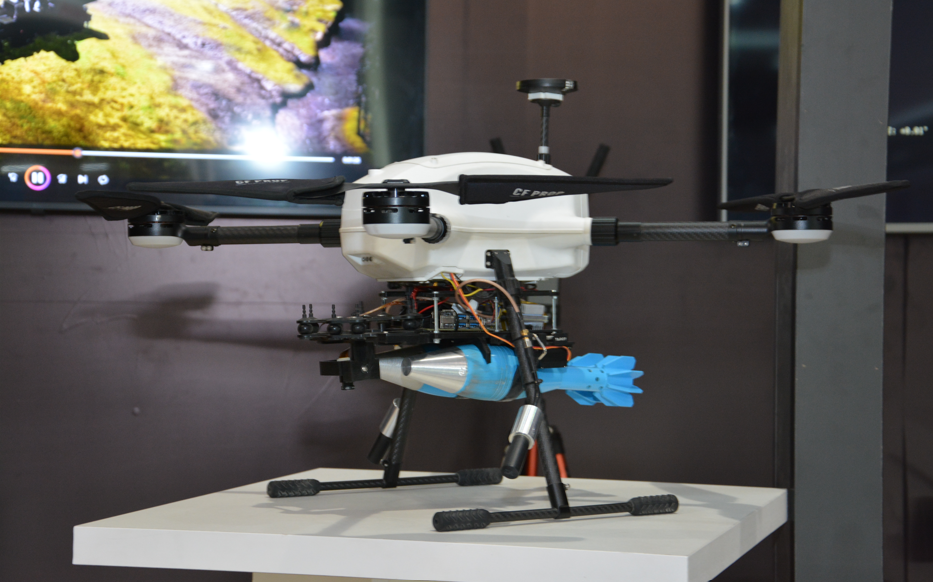
The company’s stand includes the HİSAR-class Offshore Patrol Vessel, the ASBOT KN-35 fast security boat, a kamikaze unmanned surface vehicle, kamikaze and interceptor drones, drone munitions, the remote-controlled MEMATT mechanical mine-clearing vehicle, a sea-surface cleaning vessel, a solar mast and a floating dock. Azerbaijan is already a user of ASFAT equipment, with MEMATT in service with the Azerbaijani Armed Forces for mine-clearance operations.
ASFAT’s selection reflects regional demand for maritime surveillance and security in the Caspian Sea, critical-infrastructure protection, landmine clearance, unmanned capabilities and ship maintenance and sustainment. The naval element also reflects the particular operating conditions of the Caspian. Its relatively shallow coastal waters place a premium on draught and manoeuvrability, while its lower salinity reduces water density, affecting draught and payload margins compared with open-ocean conditions. By bringing platforms ranging from the HİSAR-class Offshore Patrol Vessel to the compact ASBOT KN-35 and an unmanned surface vehicle, ASFAT is presenting different options for Azerbaijan’s maritime-security requirements in the Caspian.
The company is also presenting work on an interoperable maritime-security concept that brings manned platforms and unmanned surface vehicles into a common mission architecture.
Beyond the equipment display, ASFAT plans to use the exhibition for discussions with Azerbaijani defence and security organisations on naval platforms, unmanned systems, mine-clearance solutions, maintenance and modernisation, local production and capacity development. The company says its regional approach is intended to extend beyond direct product sales. It is seeking cooperation models covering joint production, technology and know-how transfer, training and long-term logistics support, with the longer-term objective of linking the capabilities of Türkiye’s military factories and shipyards with those of Azerbaijan’s defence industry.
HTR Showcases Security and Surveillance
HAVELSAN subsidiary Havelsan Teknoloji Radar (HTR) is highlighting security and surveillance systems for fixed sites and mobile operations at ADEX 2026 in Baku.
The company is presenting its Perimeter Security System for the close protection of deployed bases and critical areas, alongside GÖRSEN Imaging Systems for surveillance in low-light, fog and difficult weather conditions.
It is also displaying a physical security system designed for barracks, headquarters and critical facilities.
HTR’s ERİSİS security software forms another part of the display. The software brings data from multiple security components into a single interface, providing a common point for monitoring and management.
The company is also showcasing a mobile surveillance configuration mounted on a 4x4 vehicle. The platform combines radar and electro-optical sensors, communications infrastructure and an operator workstation.
According to HTR, the configuration can be adapted to different mission requirements and used to collect, monitor and transmit imagery and detection data from the field to a command centre.
HTR is using the ongoing event to meet Azerbaijani decision-makers and industry representatives and assess potential areas of cooperation. The company says its long-term objective is to develop projects shaped around local security requirements rather than limiting its regional activity to individual system sales.
Karel Brings Unified Tactical Communication to ADEX 2026
Karel has introduced its Unified Tactical Communication architecture in Azerbaijan for the first time at ADEX 2026, bringing together several systems for land-platform communications under a single framework.
The architecture combines COM-BAT, a private 5G mobile network; COM-LINE, an integrated in-vehicle communications gateway; and the MOBAT operational headset. Karel says the concept is designed to allow different communications systems to operate in an integrated, secure and centrally managed structure
An interactive area at the exhibition demonstrates how the systems work together and how a 5G-based infrastructure can support data transfer and operational flexibility in the field. Karel is also displaying systems for air and naval platforms. These include the Backup Flight Indicator for aircraft and the AD101 Modular Alarm and Public Address System for naval platforms, reflecting the company’s work across land, air and maritime applications.
Azerbaijan is already a user of Karel equipment. The company says its field telephone exchanges are in service with the Azerbaijani Land Forces, while its communications systems are also used in military airfield control towers. Karel is additionally seeking a role in the modernisation of Azerbaijan’s Su-25 aircraft through the supply of avionics systems.
The company identifies communications, platform electronics, mission-critical network infrastructure and electronic manufacturing as priorities for longer-term cooperation, including technology sharing, joint production and engineering partnerships.