If the diversity and sophistication of systems on display at the University-Defence Industry Zone at the ongoing ADEX 2026 is any indication, the future of the Azerbaijani indigenous defence industry is in safe hands.
As many as eight universities are showcasing their innovations as part of the initiative which is intended to nurture young talent and encourage them to join the country’s rapidly growing defence industry. The pipeline is strong; each university at the event has multiple teams highlighting systems that are not only complex but also linked to the realities of modern warfare. The majority of the systems make liberal use of modern technologies such as AI and machine learning.
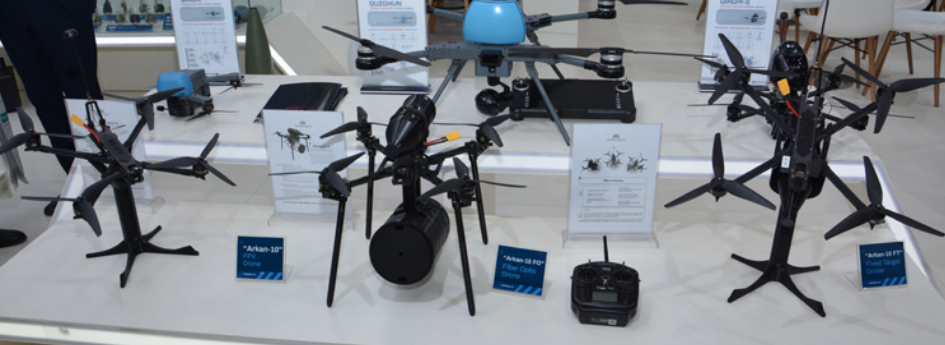
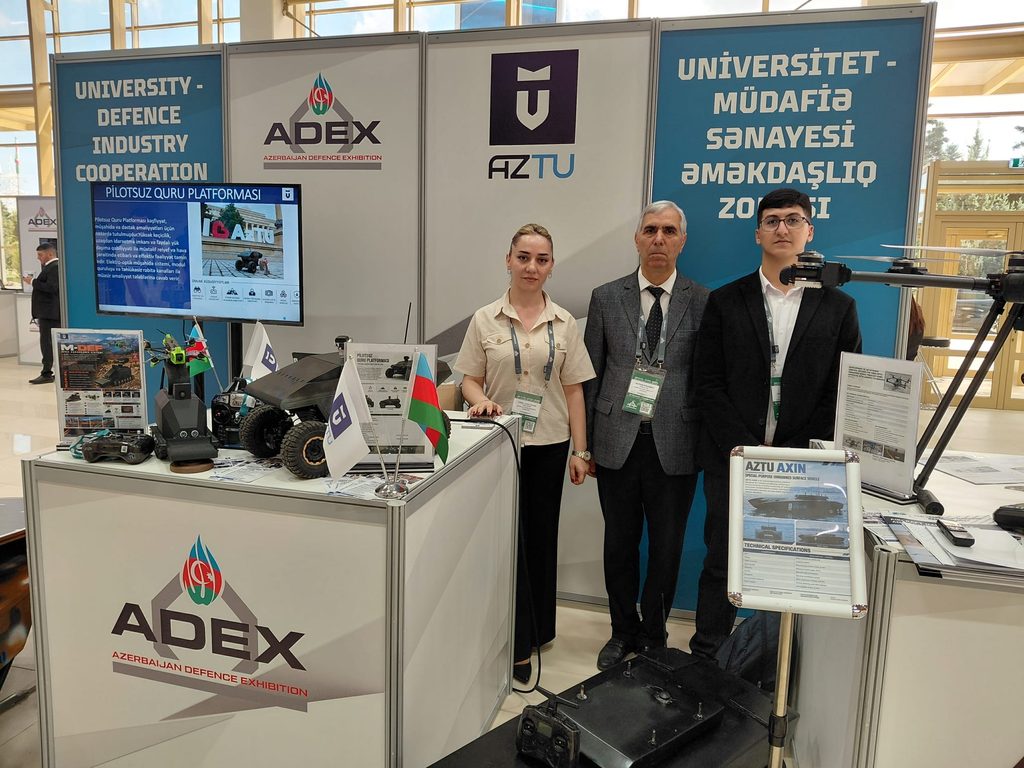
Azerbaijan Technical University (AzTU), a leading public higher education institution specializing in engineering, technology, and information systems, is turning heads at the event with their systems. Bayram Ibrahimov and Konul Huseynzade, team captains for a group that includes three professors, including themselves, and two students, have developed a control method, which uses artificial intelligence, for fiber-optic unmanned aerial vehicles.
“The students drive the project and we provide them assistance,” says Ibrahimov. “We are always trying to find ways to improve the projects that we work on. The next step is to test these in real life conditions. I am very impressed by the dedication and passion of the students; they push themselves every day and do not settle for anything but the best.”
“We intend to get feedback from domestic defence industry companies on our projects, but before that, we need to improve certain aspects,” says Huseynzade. “It is very inspiring to see students come up with original ideas; we just support them and encourage them to think out of the box.”
Ismayil Baba, a student at the university, is leading a group that has four other students; the students have two professors acting as mentors. Baba has three projects on display at the event, the cornerstone of which is a mine detection system (M-DEF) that combines the capabilities of a robot and a drone.
“The drone flies and inspects the area while the robot scans the area to detect landmines. The robot then maps the mines and that information is provided to demining technicians. The system has a modular and expandable design. Our mindset is to work on projects that respond to modern needs. We monitor defence industry trends and do plenty of research before working on a project.”
AzTU Axin is a special purpose unmanned surface vessel that is designed for coastal surveillance, preliminary reconnaissance and the monitoring of hydraulic structures. Its twin electric motors, real-time video and telemetry systems make stable and reliable remote operations possible.
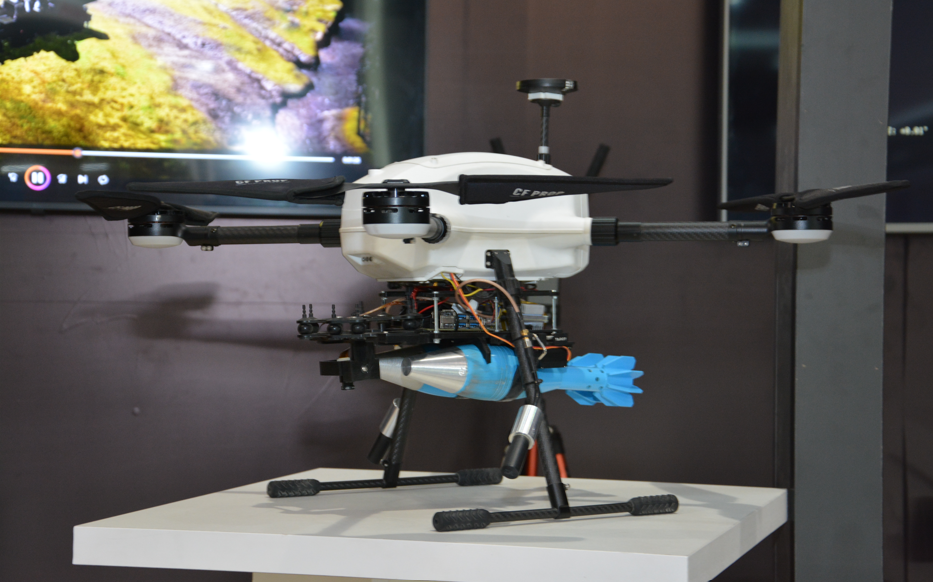
Elmar Gasimovis, the team captain of another group at the AzTU, is displaying Sukut, a hexacopter-based tactical mine. “Unlike traditional mines, Sukut is a tactically controllable hexacopter-mine complex designed to deliver payloads precisely to the target,” he says. “Its primary objective is to neutralize enemy personnel located in strategic facilities, shelters, and frequently used transit routes via a centralized sensor system. The system weights1.4 kg while the operational range is 2 km.
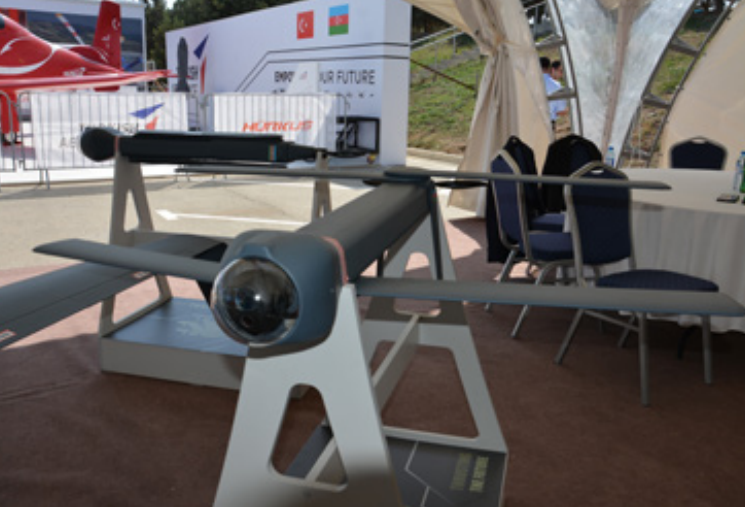
The trend of unmanned systems replacing manned assets in military arsenals is reflected in the systems that are on display at the zone. While Khazar University has a robot tank as one of its projects on display, National Aviation Academy has a lineup of UAVs on display, including Maarif, X-wing UAV, and target type UAV that is designed to simulate realistic aerial targets for air defense training. Among the other universities displaying their projects and systems are Baku Higher Oil School, Baku State University, and Azerbaijan State Oil and Industry University.