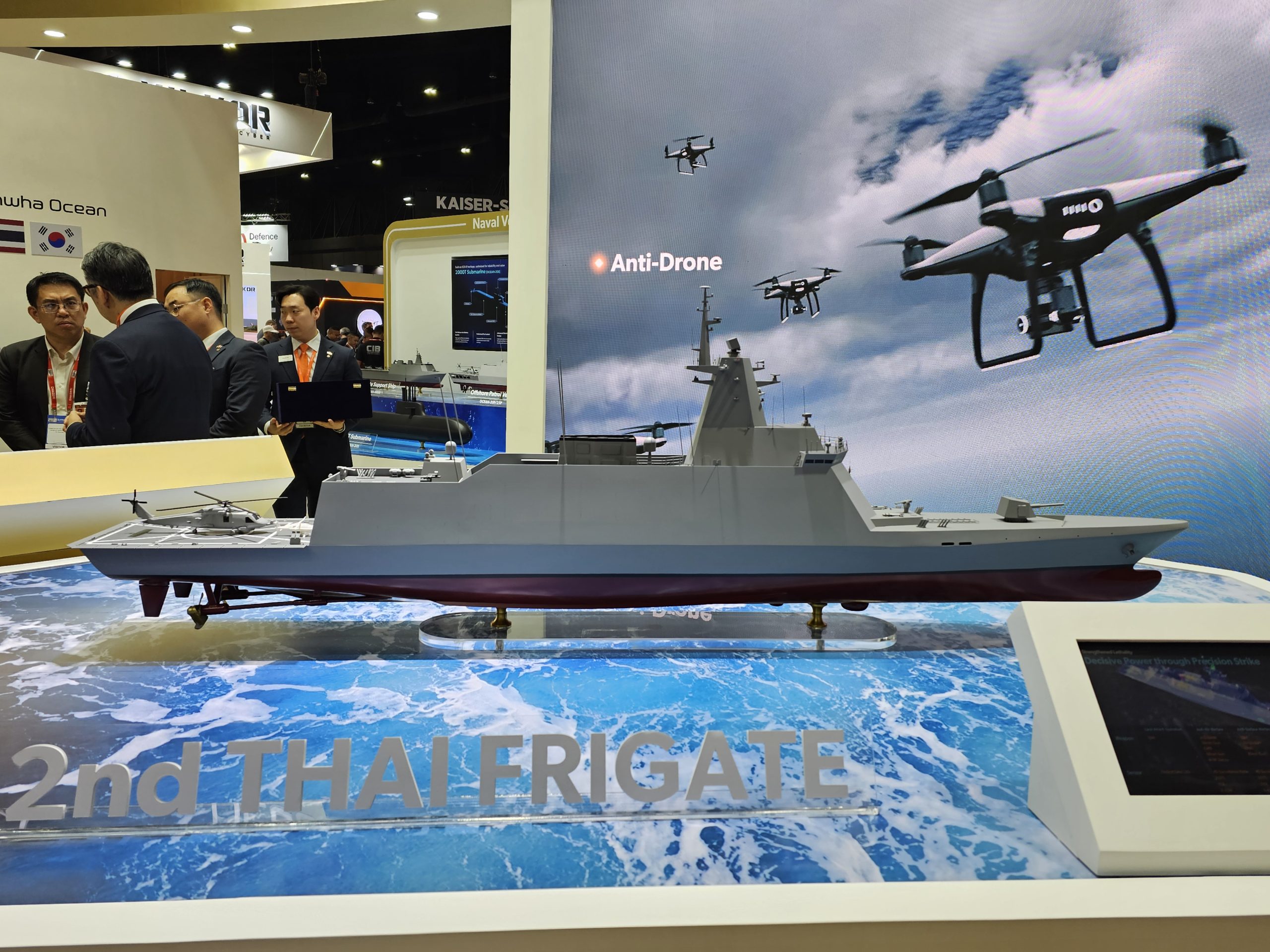
Cohort plc and Hanwha Ocean have entered into an agreement to jointly address the future needs of the Royal Thai Navy. Cohort, an independent defence technology group, and the South Korean shipbuilder Hanwha Ocean will seek to deliver innovative and cost-effective defence technologies that will support the RTN’s second-phase frigate acquisition programme, expected in 2026.
“We are delighted to collaborate with the Cohort Group on the second-phase frigate programme. By combining Hanwha Ocean’s advanced shipbuilding expertise with Cohort’s proven weapon and sensor technologies, we aim to deliver a larger frigate with enhanced lethality—a legendary asset that will further strengthen the Royal Thai Navy’s combat readiness and maritime power,” said Charlie S.C. (Sung-chul) Eoh, President of Naval Ship Business at Hanwha Ocean.
Under the terms of the MoU, Cohort will offer its proven naval defence capabilities such as sonar systems, torpedo launcher systems, surveillance, targeting and fire-control systems, as well as communications management. Cohort’s maritime technologies, which include satellite communications terminals, are also on offer to meet the needs of the RTN.
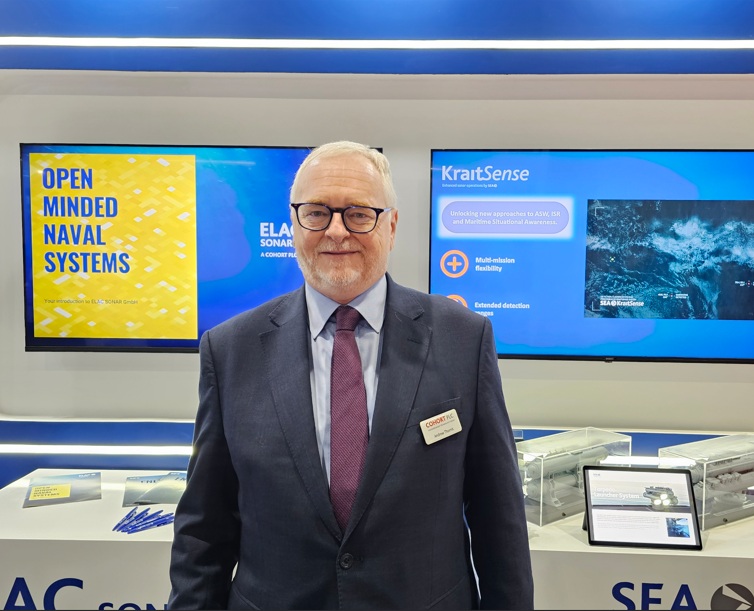
GBP Daily News spoke with Andrew S. Thomis, Chief Executive of Cohort plc, on the sidelines of the show to learn more about the company’s plans for Thailand. Thomis said Cohort has a strong relationship with Hanwha Ocean, which already has a productive partnership with ELAC Sonar.
“The new memorandum covers several elements for the new Thai Navy frigates: ELAC Sonar’s systems, SEA’s towed-array sonar, SEA’s torpedo launchers, CHESS’s surveillance and fire-control systems, and EID’s maritime communications,” Thomis said. He added that, with Hanwha Ocean being one of the world’s foremost builders of naval surface and subsurface platforms, the collaboration combines their expertise in ship design and construction with Cohort’s systems—communications, intelligence, and defence—that enable those ships to operate effectively.
Thomis stated that the company’s focus is on the systems that make those platforms effective: sensors, communications, and defences. “That’s why our partnership with Hanwha works so well. They bring platform engineering; we bring innovation, imagination, and the high-technology systems that give those platforms capability.”
Thomis attributed Cohort’s strong success in Southeast Asia—a region with demanding customers and challenging maritime environments—to several factors. “First, technical innovation. Our systems—whether sonar, communications, or tracking—are genuinely best in class. Second, our decentralised structure allows us to respond quickly to customer needs. Decisions are made locally, not through layers of bureaucracy. And third, we’re cost-effective. Without a large central overhead, our businesses remain lean and competitive. That agility and value combination resonates strongly with customers in this region.”