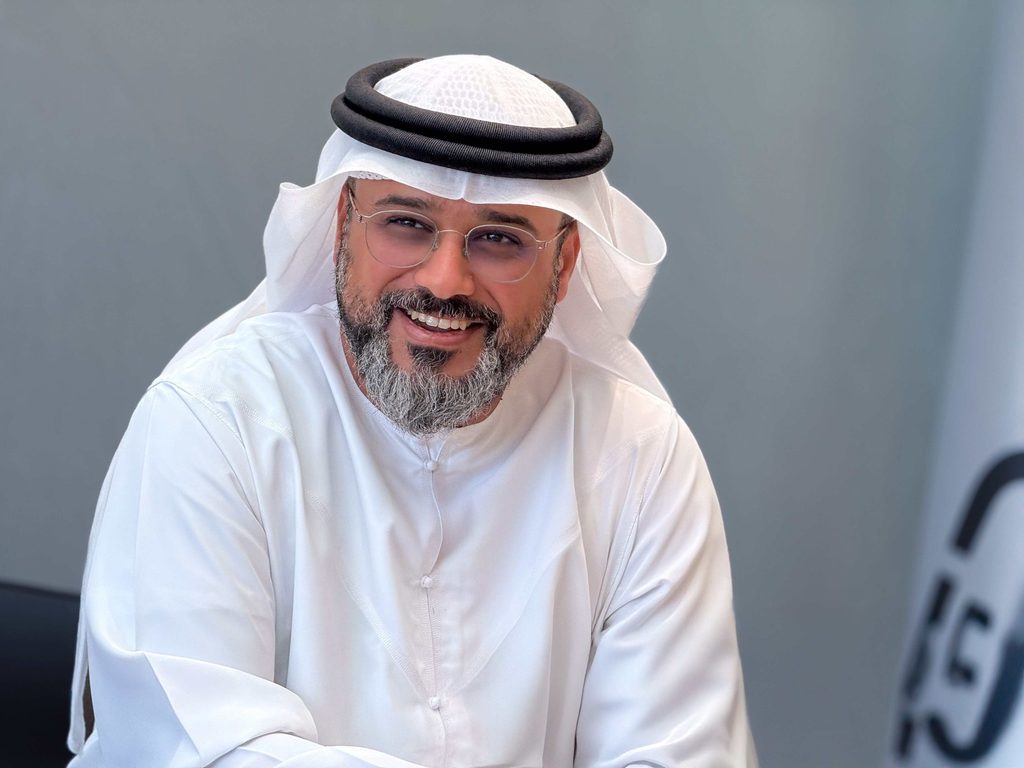
Spokesperson: Hamad Al Marar, MD & CEO, EDGE
EDGE eyes Caucasus growth with local production push
EDGE is looking beyond equipment sales as it expands its presence in Azerbaijan and the wider Caucasus and Central Asia, with local production, technology transfer and long-term industrial partnerships at the centre of its regional strategy.
Speaking exclusively to Jay Menon of Daily News at ADEX, EDGE Managing Director and CEO Hamad Al Marar said the group sees enough common defence requirements across the Caucasus and Central Asia to support a broader regional market rather than approaching each country in isolation. Excerpts:
Q: EDGE is returning to ADEX after its debut at the previous edition. How do you view Azerbaijan and the wider Caucasus and Central Asia region in your long-term growth strategy?
Azerbaijan has a robust local industry of its own, and across the Caspian the Central Asian states are building quickly, and building together.
What we bring is the ability to transfer capability, not just hardware. We have done it in programmes across the Middle East, Africa and Asia. Local assembly, local maintenance, local engineers trained on our lines. A partner ends up with something they own and can sustain without us.
Export is now the larger part of our business. It has grown from USD 50 million in 2019 to USD 3.7 billion in 2025, across more than 100 countries. The Caucasus and Central Asia sit between markets we already serve to the east and to the west, and the requirements here are close to ones we know well.
Q: Which products or capabilities are you highlighting, and have regional requirements influenced your portfolio or roadmap?
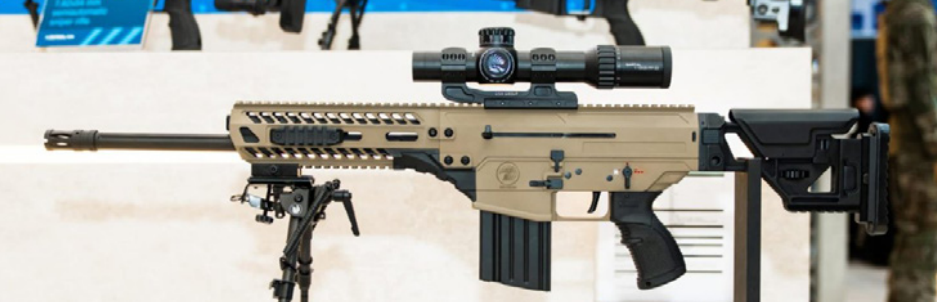
We are showing the chain rather than the catalogue. Air defence with SKYKNIGHT, our inner-layer air defence missile system, alongside SHADOW 3. Precision effect with the highly modular and mission-proven AL TARIQ and THUNDER lines of precision-guided munitions, and the DESERT STING family of guided-glide weapons. Persistent reach with SHADOW 25 and SHADOW 50. Sensing with TAWAQ-S. The electromagnetic side with SKYSHIELD QD and GPS-PROTECT 8. And munitions and small arms from LAHAB, CARACAL and CARACAL LIGHT AMMUNITION.
Has the region shaped that? Yes. Customers here assume they will operate without an assured satellite signal, and they expect to defend against drones and precision weapons, not only aircraft. The SHADOW series carries GPS anti-jamming and navigates on computer vision for exactly that reason. GPS-PROTECT 8 goes onto a smart weapon as readily as onto an aircraft or a ship.
Q: Is EDGE exploring partnerships, local manufacturing or technology collaboration in Azerbaijan or neighbouring markets?
Yes, and that is the main reason we are here.
There is not one model we pursue. It depends on the programme. You have platform-level cooperation, you have system-level cooperation, and you have subsystem-level cooperation, and each can take the form of a joint programme, a joint venture or a subcontract relationship. What matters is that both sides gain, and that neither compromises future business.
Where a partner is already strong, we build on that strength. Existing capability is an asset we work with, and it gets us to a sustainable result faster.
Azerbaijan has an industrial base to work with, and an ecosystem is forming around it. What we bring is technology transfer, local production and the training that lets a customer sustain a system for decades rather than years. That is what turns a sale into a relationship.
Q: Which product segments are generating the strongest export interest, and how important is the Caucasus to your export plans?
Four segments. Precision-guided and guided-glide weapons, where we have established a strong customer base. Loitering munitions, where the conversation has moved from interest to programmes. Counter-drone and electronic warfare, which has become a standing requirement rather than a specialist one. And munitions and small arms, where security of supply now matters as much as the specification.
You can see the shift in our own numbers. Export was USD 50 million in 2019. In 2025 it was USD 3.7 billion, and we supply more than 100 countries.
On the Caucasus, I would put it this way. Very few individual markets justify the investment on their own. Economy of scale comes from a region, not a country. Between the Caucasus and Central Asia there is enough common requirement to build critical mass, and that is what makes this part of the world important to us rather than incidental.
Q: Where do you see the biggest opportunities over the next five years, and how is EDGE positioning itself?
The rules of the game have changed, and they have changed faster than most procurement cycles can absorb.
Take the drone problem, which this region understands better than most. Answering it is not one product. It is TAWAQ-S detecting and classifying at range, SKYSHIELD QD denying the control link and the navigation signal, and SKYKNIGHT intercepting what gets through, up to 80 targets at once. Autonomy, electronic warfare and advanced munitions in a single chain, which is where I see the next five years going.
We are positioned across all three. We hold 250 products across more than 35 entities, we build around technologies that cut across products rather than around single systems, and we have grown by acquiring engineering depth rather than finished designs.
The last piece is open architecture. No armed force will ever be single-vendor. Over the next five years the advantage will sit with whoever works well alongside everyone else.