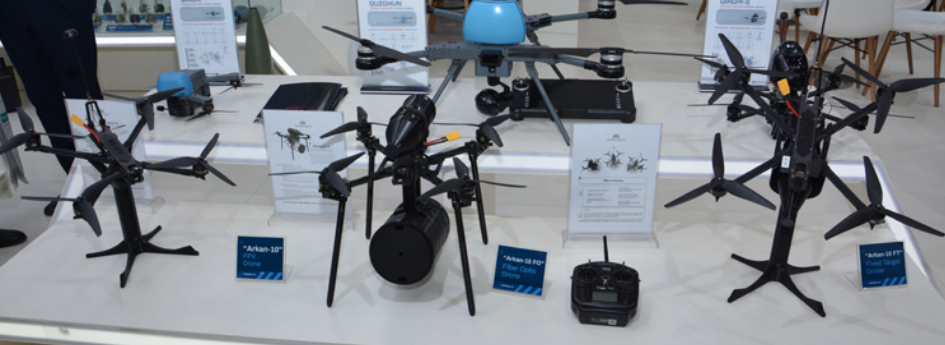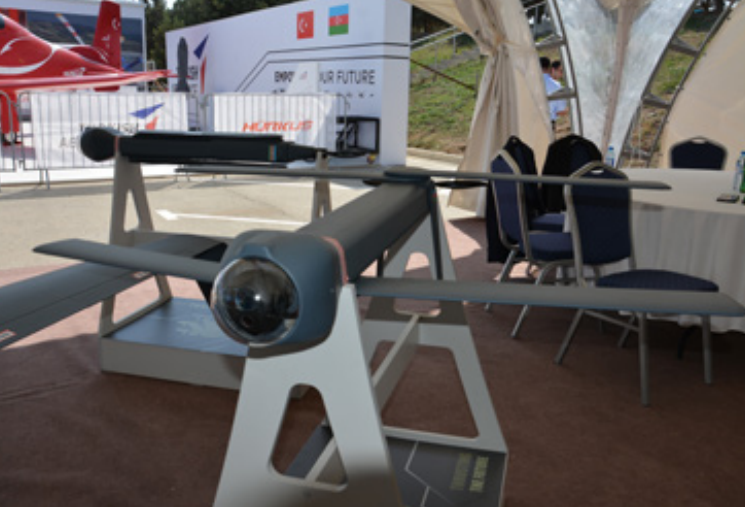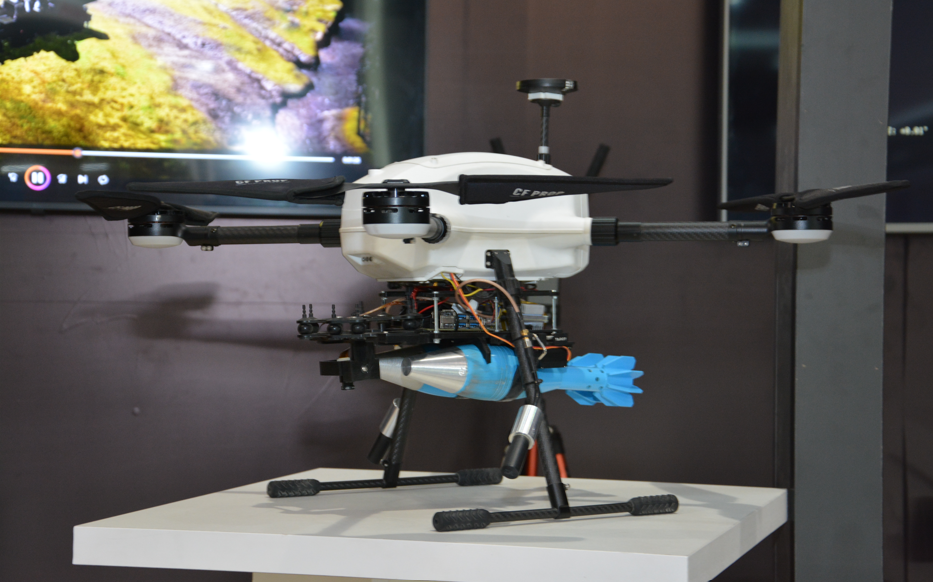
Drones have transformed the economics and accessibility of air threats, forcing governments and militaries to reassess how they detect, disrupt and defend against increasingly sophisticated unmanned systems. Previously, these systems were originally developed for military threats, but they now include protecting civilians and critical infrastructure including airports, power stations, ports and energy facilities. The reason is simple: When a drone is shot down over a runway, a power station or a crowded port, the danger does not end, it just changes shape. Falling debris, disrupted operations and unpredictable wreckage are why militaries and governments are increasingly turning to a different approach, defeating the drone without destroying it. As air threats have grown cheaper, more accessible and harder to trace to a single origin, the systems built to counter them have had to expand too, from protecting military assets to critical infrastructure where civilians are now directly in the blast radius of any wrong call.
For years, the instinctive answer to an incoming drone threat was a kinetic one, shoot it or fry it with directed energy. Both work, but both come with a problem that matters more with every passing year of drone proliferation. A drone killed kinetically does not land, it crashes wherever gravity takes it. In a battlefield, that may be an acceptable risk. Above a border crossing, a power station, or a crowd of civilians, it is not.
Low-cost drones can generate disproportionate combat zone effects against far more sophisticated capabilities. The C-UAS challenge is no longer simply whether a drone can be defeated, but whether it can be defeated at a cost that makes sustained defence viable. A defender can theoretically shoot down an inexpensive drone with a high-end surface-to-air missile, but repeatedly doing so can be economically and operationally unsustainable. EDGE built its integrated defensive ecosystem on the foundations of modern C-UAS doctrine, a typical engagement chain that includes threat detection and tracking with radio frequency (RF) sensors, identifying targets with electro-optical infrared (EO/IR) sensors, classifying the threat via a command-and-control system, then combining this data before an appropriate effector is selected.
Border security starts with knowing something is coming before it arrives. That is the premise behind BORDERSHIELD, EDGE's flagship C-UAS platform. It is an AI-powered autonomous system built for persistent awareness along the perimeter, giving defenders the tactical edge of early detection and identification. It reads the cellular landscape continuously, supporting Global System for Mobile Communications (GSM), Universal Mobile Telecommunication System (UMTS), Long Term Evolution (LTE), and 5G, alongside high-end scanner capability, and smarts switches between antenna sectors to always keep cellular identities in view. The moment a threat is picked up, jamming a threat's communications link begins well before it comes within engagement range. That head start is the point: more time to assess, more time to respond, and in this domain, seconds decide outcomes.
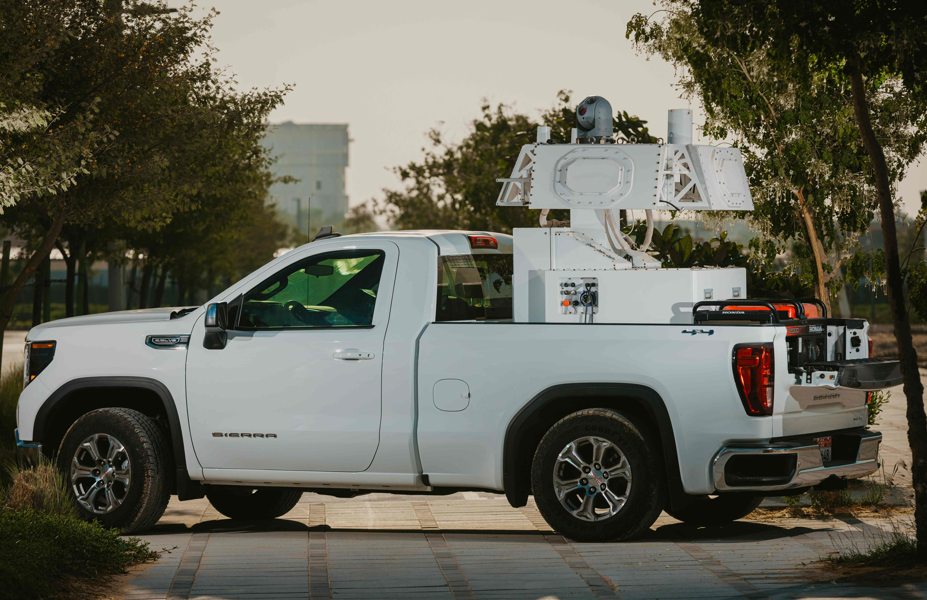
Where BORDERSHIELD watches the approach, SKYSHIELD QD handles what happens next. As the vehicle-mounted variant of SKYSHIELD, it sits at the core of EDGE's C-UAS engagement layer, and its defining feature is architectural: detection and defeat live in one system, one interface, closing the gap between identifying a threat and neutralising it. A mast raises the full sensor and effector suite above the roofline, clearing an unobstructed 360-degree field. Active electronically scanned array (AESA) radar and an electro-optic system do the watching; jammer and spoofer antennas do the acting, jamming to sever Global Navigation Satellite System (GNSS) signals and command-and-control links together, spoofing to quietly feed drones false positioning data and walk them off course.
Then there is the navigation layer. GPS-PROTECT exists to keep satellite positioning trustworthy for friendly systems even when the electromagnetic environment is not cooperating, using digital processing and array antenna technology to shield GPS receivers from radio frequency (RF) interference and heavy jamming. Its GPS-PROTECT 8 variant, built around 8 antenna array elements, is suited to aircraft, vehicles, vessels, and guided weapons to keep them navigating accurately even in contested environments.
In drone technology, capability development occurs in rapid cycles. Traditional defence platforms may remain operational for decades, but drone technology can change in months, weeks, or even days. Commercial electronics, software-defined systems, AI, additive manufacturing, and rapid production mean operators can modify drones quickly in response to countermeasures. A C-UAS system designed to defeat today's drone threats may struggle against tomorrow's autonomous, fibre optic, frequency hopping, or vision guided variant. That is why adaptability, not just interception power, is becoming the real currency of C-UAS. For EDGE, that is the argument for treating C-UAS systems not as a static product line, but as a sovereign ecosystem in constant motion, one built to have tomorrow's answer ready before another version of a low-cost drone even shows up.