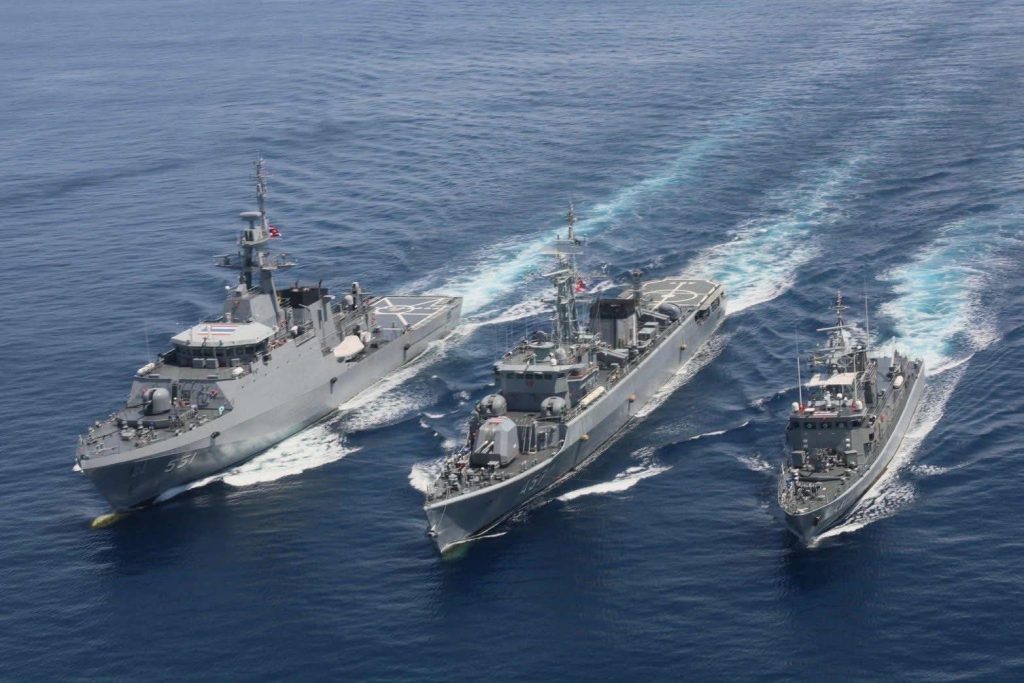
The Royal Thai Navy (RTN) is eyeing a major modernisation of its warship fleet with plans to acquire four new frigates. The RTN is also slated to take delivery of its long-delayed S26T diesel-electric submarine (SSK) from China before the end of the decade. China Shipbuilding and Offshore International Company (CSOC) had received the contract worth approximately USD367 million for a single S26T for the RTN in May 2017 with an original delivery date of 2023. The RTN could potentially acquire an additional submarine, though such an induction would only take place between 2035-2040.
Frigate Forward
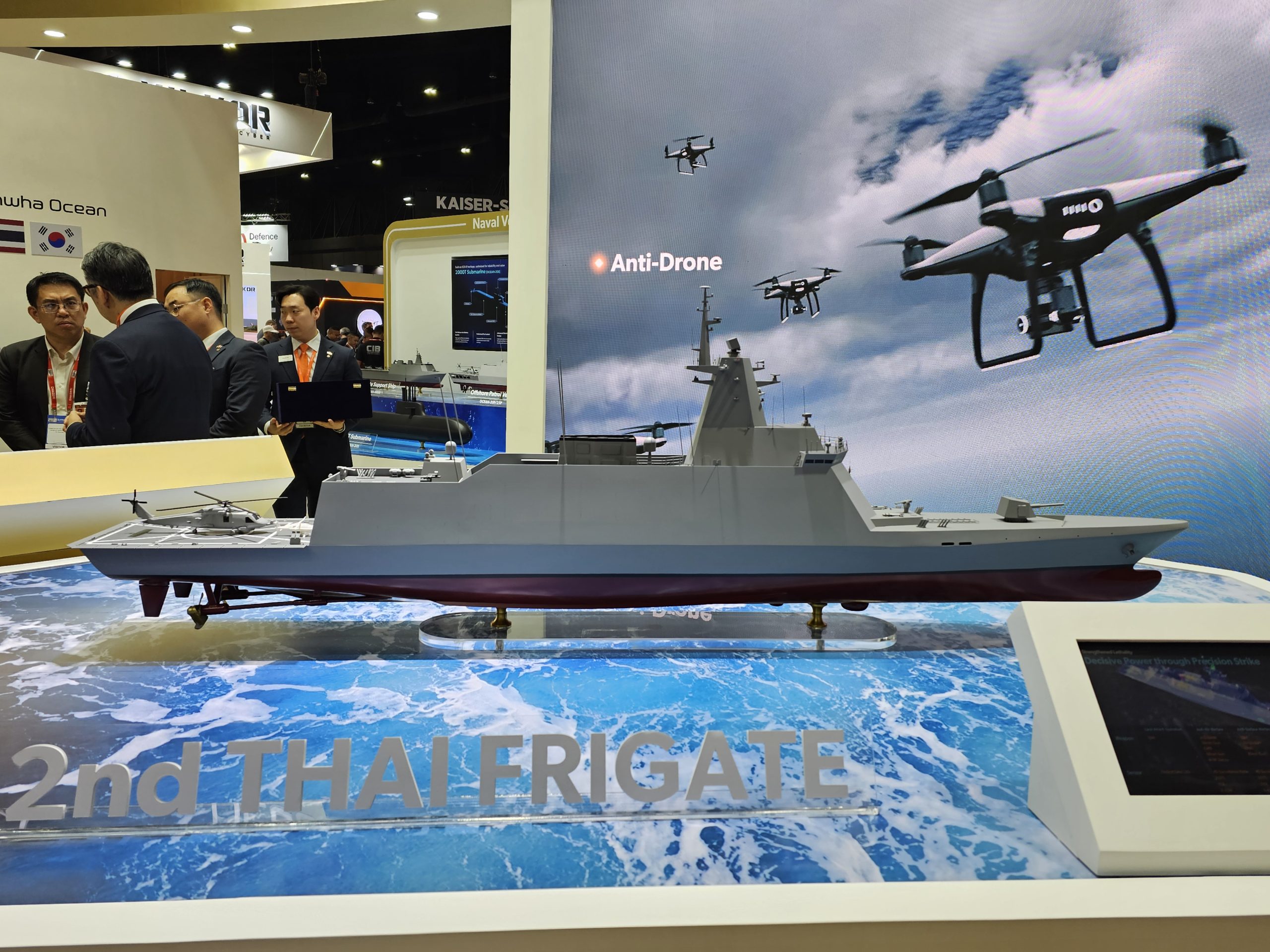
As per current plans, the RTN intends to acquire two new frigates next year, followed by two more the year after. The planned acquisitions form part of a broader effort to modernise the fleet and enhance maritime security. The RTN plans to construct two frigates of approximately 4,000 deadweight tons (DWT) each and is evaluating multiple development models, including foreign procurement, joint ventures with local shipyards, and investments in port infrastructure to support long-term naval capabilities. The initial program budget is estimated at approximately $530 million per ship for the construction of one frigate, with another frigate budget proposal planned for the following year. The RTN is especially interested in partnering with companies that can deliver cutting-edge technologies, equipment, and expertise. These collaborations may also extend to areas such as workforce development, technology transfer, and port infrastructure improvements—components that will be crucial to the success of Thailand’s long-term maritime defence strategy.
The RTN has proposed a budget for the first two frigates in the 2026 fiscal year, subject to approval from the government and Parliament. The Thai Navy currently operates seven frigates, six of which were acquired from China between the late 1980s and early 1990s. Its newest frigate, HTMS Bhumibol Adulyadej, was commissioned in 2018.
The RTN requirement has caught the attention of global shipbuilders with several of them competing for the contract. This includes France’s Naval Group, Turkey’s TAIS Shipyards, South Korea’s Hanwha Ocean, and Spain’s Navantia. While details of their proposals have yet to be disclosed, Naval Group is expected to offer designs such as the 111-metre Gowind-class, the 142-metre FREMM, or the company’s latest 122-metre FDI frigates, with displacements ranging from 3,100 to 6,000 tonnes. TAIS Shipyards is known for its BORA series, which can be configured as frigates measuring 105, 115, or 140 metres in length, with displacements between 2,500 and 6,500 tonnes.
Hanwha Ocean, which previously delivered the HTMS Bhumibol Adulyadej (formerly HTMS Tachin) to the RTN in 2018, is also a strong contender. A Thai parliamentary defence committee recently acknowledged the company’s expertise, highlighting its advanced production processes and commitment to technology transfer. Meanwhile, Spain’s state-owned Navantia has expressed interest in the programme, with the Spanish ambassador to Thailand emphasising the company’s financial stability and capability to build and maintain vessels for the RTN.
The procurement aligns with Thailand’s objective of reinforcing its maritime sovereignty and addressing regional security concerns. The selection process is expected to consider factors such as technological capabilities, cost-effectiveness, delivery timelines, and opportunities for local industry collaboration.
Undersea Capability
Thailand’s long-delayed plan to procure a Chinese-built S26T submarine (a derivative of the Yuan-class) has faced major delays due to the unavailability of its originally intended German-made engines. The original design called for German MTU 16V396 SE84 diesel engines paired with a Stirling air-independent propulsion (AIP) system. However, Germany declined to export the engines due to an existing European Union arms embargo on China. As a result, the RTN eventually opted to use Chinese-made CHD620 diesel engines instead. Reports in the Thai media have indicated that the RTN was reportedly unwilling to accept the Chinese marine-diesel but however had ascertained that the powerplant had performed satisfactorily with the Pakistan Navy.
The S26T submarine has a surfaced displacement of approximately 2,600 tonnes and a submerged displacement of around 3,600 tonnes. It measures 77.7 metres in length with a beam of 8.4 metres and a draught of 5.5 metres. Powered by the new Chinese engines, the vessel is expected to deliver a combined output of 6,092 horsepower, enabling speeds of up to 16 knots on the surface and 23 knots submerged.
Operationally, the S26T has a range of up to 8,000 nautical miles at cruising speed and a submerged endurance of up to 20 days. It is designed to operate at depths of up to 300 metres and accommodate a crew of 38.
The submarine’s combat systems include six 533mm torpedo tubes capable of deploying various torpedoes, Yingji-82 (C-802) anti-ship missiles, and up to 30 naval mines. The sensor suite includes a Type 359 radar, H/SQG-4 and H/SQC-207 sonar systems, as well as advanced electronic warfare and communication equipment.