A target that has not moved in a week is a different problem from one that will be gone in 90 seconds. A target 290 kilometres beyond the launch point is different again, as is a small unmanned aircraft crossing a perimeter at low level with no radar signature worth the name. The SHADOW series treats these as separate requirements, not variations on a theme, and answers them with three airframes built on a shared design logic.
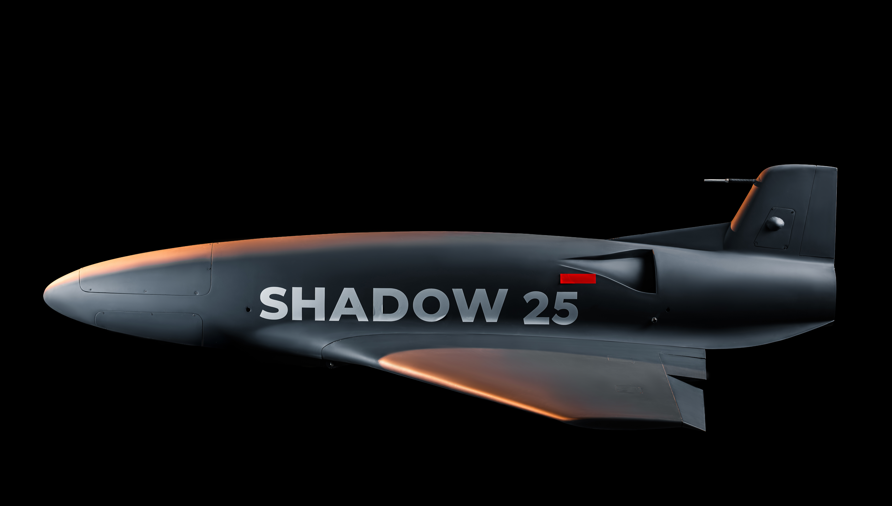
SHADOW 25 is the reach-and-speed member of the family. Jet-powered, with a range of 295 kilometres, it is launched from a canister that can be mounted on a light tactical vehicle and moved with the force it supports. Speed is the point. The interval between a target being identified and an effect arriving is the interval in which that target can relocate, disperse, or bring a countermeasure to bear, and a jet-powered airframe compresses it. For a mobile target set, or for one held at risk by an air defence system that reacts quickly, that compression is the capability.
SHADOW 50 answers the opposite requirement. With a range of 250 kilometres and the endurance to match, it is built to hold a target area and wait, and is optimised for fixed, high-value points instead of fleeting ones. Loiter time is often discussed as a strike attribute. It is at least as much an intelligence one. An operator who can observe an aim point for an extended period before committing has the option of confirming, re-tasking, or standing down, and the decision improves with every minute the airframe remains overhead.
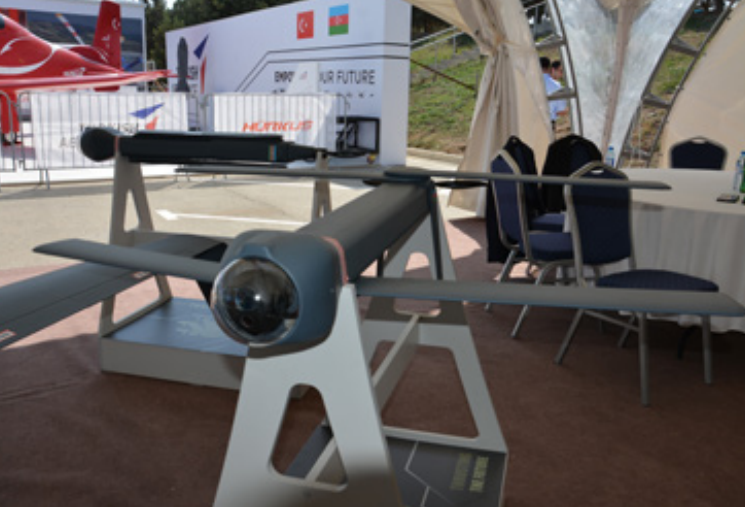
SHADOW 3 is the outlier and, for many operators, the most interesting of the three. It is a portable vertical take-off and landing system with a dual mission: a guided strike munition in one configuration, a counter-measure drone capable of air interception in the other. It carries a three-kilogram payload beyond 30 kilometres, comes in electric or turbine-jet propulsion, and exceeds 400 kilometres per hour in its faster configuration. It also conducts electronic warfare tasks.
The interception role deserves attention because of the economics behind it. Defeating a small, low-cost unmanned aircraft with a surface-to-air missile is a trade no force can sustain at volume, and the exchange rate is the reason counter-drone doctrine has moved as quickly as it has. An interceptor drone inverts it. SHADOW 3 brings guidance by GNSS, optical or radar seekers, computer vision target recognition, and autonomous target acquisition and engagement to that task. Where the authority for engagement sits within that sequence is a decision for the operating force, not a fixed property of the system.
Navigation is where the series reflects current conditions most directly. Satellite navigation cannot be assumed to be available, and the SHADOW airframes are built on that assumption rather than against it. GNSS anti-jamming protection is standard, and computer vision navigation allows the aircraft to continue to a target area using what it can see rather than what it can receive. A loitering munition that stops being useful the moment an adversary switches on a jammer is not a loitering munition, and the design treats resilience in the electromagnetic environment as a baseline requirement, not an option.
What holds the three together is commonality in the things that cost money after the sale. Shared launch approaches, a shared guidance philosophy, and a shared operator interface mean a force adopting more than one member of the family is not adopting more than one training pipeline, spares chain, or set of procedures. For smaller forces in particular, that matters more than any single line in a specification table, because sustainment is where capability is usually lost.
Operators across the Caucasus and Central Asia have watched loitering munitions move from a supporting role to a central one in a shorter period than most capability shifts allow for, and the requirement has sharpened accordingly. Long, difficult terrain favours systems that can be dispersed and moved. Target sets that mix fixed installations with mobile elements favour a family over a single airframe. Contested electromagnetic conditions favour systems designed for them. The SHADOW series was developed against that profile.
EDGE first showed the family publicly at IDEX 2021 and has developed it steadily since, including flight testing of rocket-assisted take-off for the SHADOW 25. The systems come with the launch platforms, ground control, and integration support needed to bring them into service, and EDGE works with customers on the operational concept as much as on the hardware.
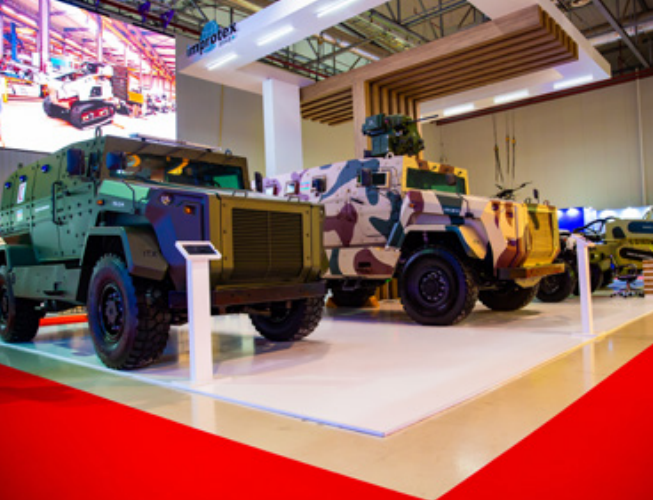
The SHADOW series is on display at ADEX 2026 in Baku from 30 September to 2 October. The wider EDGE line-up at the show spans precision-guided effects, air defence systems, and electronic warfare systems, alongside unmanned aerial vehicles, radars, and ammunition from non-lethal natures through to small, medium, and large calibre.