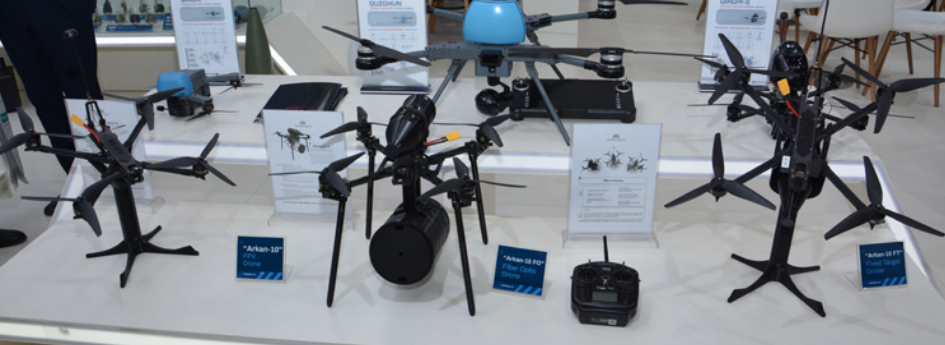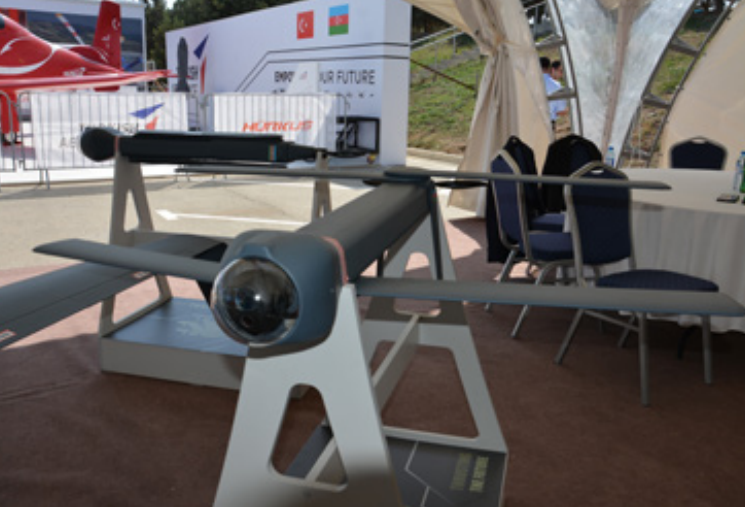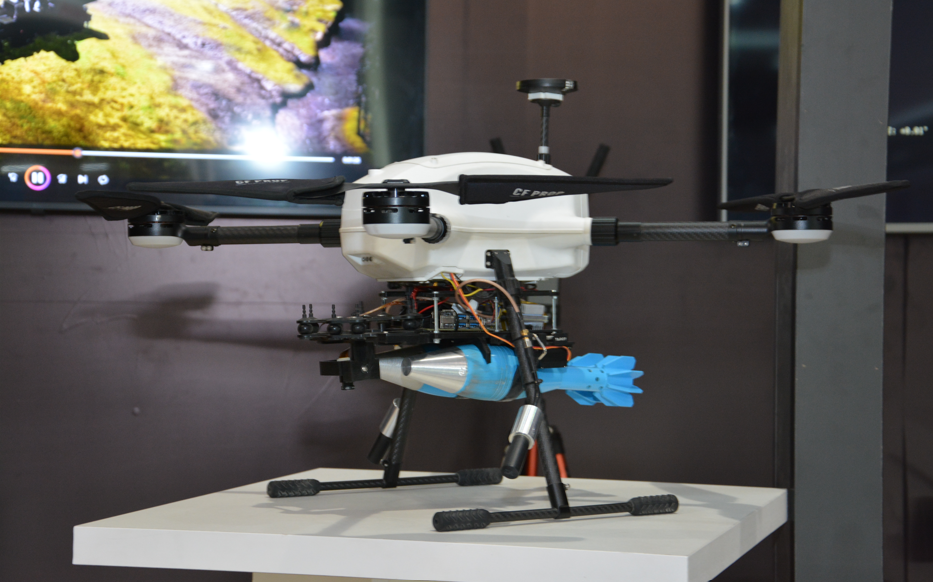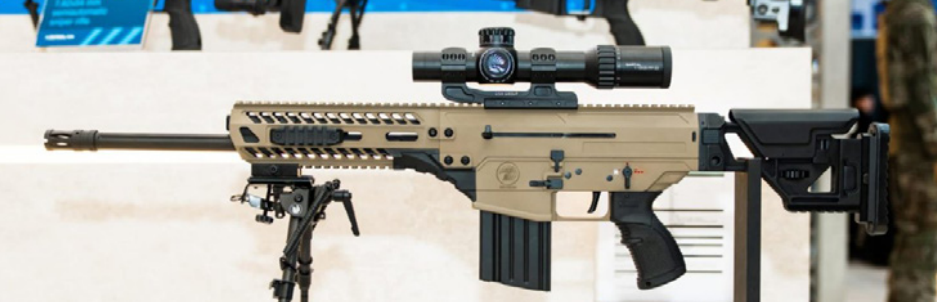
Turkish defence companies are looking to expand their presence in Azerbaijan and the wider Caspian and Central Asian markets, bringing a growing portfolio of unmanned aircraft, armoured vehicles, precision weapons, defence electronics and naval systems to a region where industrial cooperation is becoming an increasingly important part of procurement.
Azerbaijan is already familiar with several Turkish-built platforms, giving manufacturers arriving in Baku a base from which to pursue new requirements and longer-term partnerships.
Unmanned systems are among the most prominent. Azerbaijan operates Baykar's Bayraktar TB2 and has also acquired the larger twin-engine Akıncı unmanned combat aerial vehicle. Akıncı is designed to carry a wider range of sensors and weapons, including precision-guided and stand-off munitions.
The market extends well beyond Azerbaijan. Kyrgyzstan operates both the TB2 and Akıncı, while Turkmenistan has acquired the TB2. Kazakhstan has taken a different route, signing an agreement with Turkish Aerospace Industries covering the Anka medium-altitude, long-endurance UAV, including co-production and technical support.
Land systems and precision weapons offer further opportunities
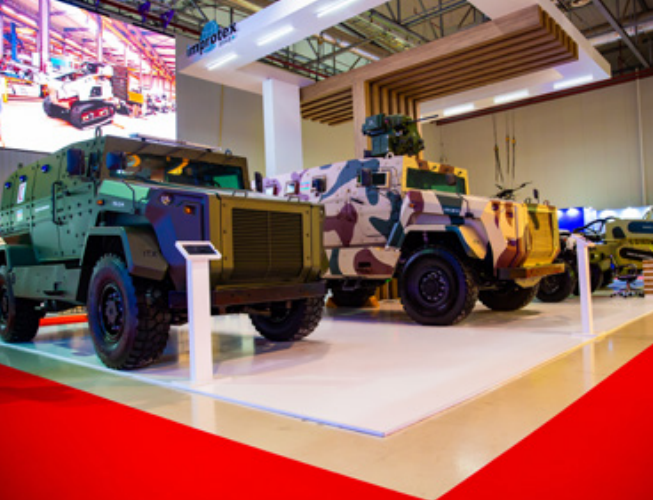
Turkish manufacturers are also competing across the protected-mobility market. Nurol Makina, BMC and Otokar have established customers across the Caucasus and Central Asia, with products including the Ejder Yalçın 4x4 and BMC Vuran. Both combine protected troop transport with mobility suited to difficult terrain.
Roketsan brings another part of the portfolio. Azerbaijan operates the company's TRG-300 guided rocket system, which uses inertial and satellite navigation to provide long-range precision engagement.
Electronics are becoming equally important. Aselsan has worked with Azerbaijan on communications and C4ISR capabilities, including software-defined radios and secure tactical communications, an area likely to grow as armed forces increasingly connect sensors, platforms and command networks.
Azerbaijan partnership moves into aerospace manufacturing
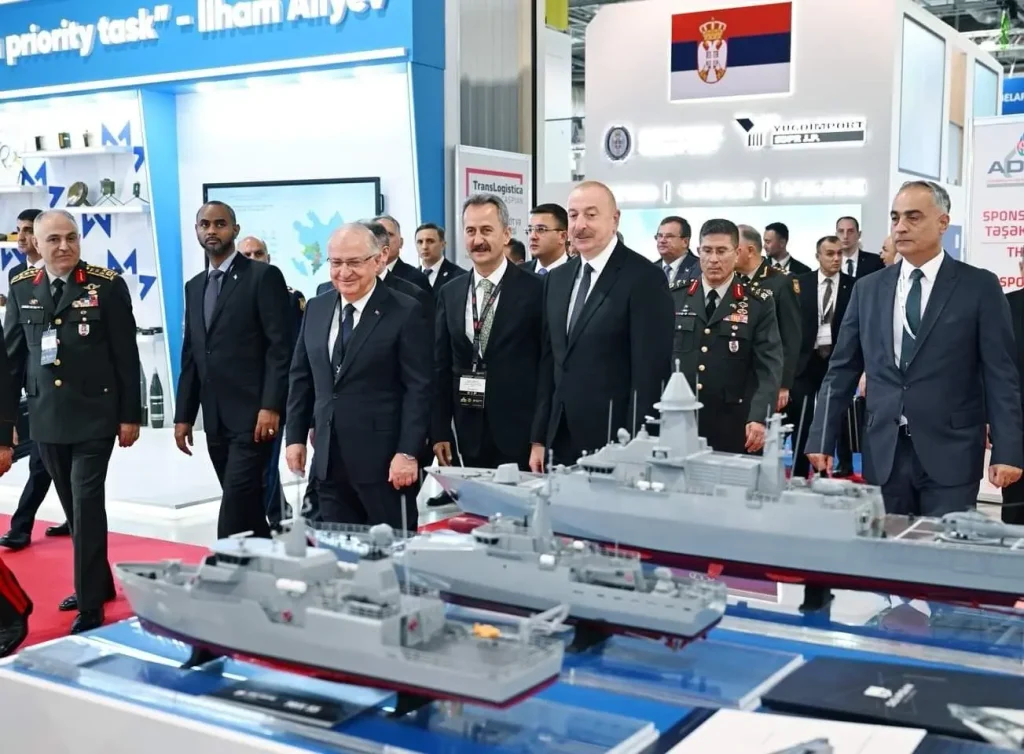
Maritime requirements around the Caspian offer another potential market. Turkish shipbuilders including DEARSAN and STM have developed patrol and combat vessels for regional customers, while protection of offshore energy infrastructure and commercial shipping remains an important requirement around the Caspian.
The relationship with Azerbaijan is also developing an industrial dimension. Azerbaijan is participating in Turkish Aerospace's KAAN fighter programme under an agreement covering engineering capabilities and subsystem manufacturing.
For companies exhibiting at ADEX, that points to the broader direction of the market. Baku is not simply a destination for finished defence products. Opportunities increasingly encompass technology cooperation, local industrial participation, support and joint development, areas likely to feature prominently in discussions on the show floor.