Türkiye wants to take its defence partnership with Azerbaijan beyond equipment sales towards joint production, technology sharing and capacity development, bringing together Azerbaijani expertise and human capital with Türkiye’s research, engineering and production capabilities. Turkish Minister of National Defence Yaşar Güler says the relationship could also provide a model for wider defence cooperation and greater interoperability among members of the Organization of Turkic States.
Güler also pointed to new opportunities for Türkiye and Azerbaijan in advanced air systems, unmanned technologies and space. He said the aim was to turn the two countries’ existing potential into joint projects and long-term partnerships.
Türkiye has become one of the world’s fastest-growing defence industry exporters. What are the key factors behind this transformation?
Türkiye’s geographical proximity to areas of armed conflict, the ongoing instability in our region, and the geopolitical and strategic changes taking place around the world require our Armed Forces and other elements of our national power to remain effective, strong and prepared at all times. In this regard, our continuously developing products and systems, built upon the capabilities and the experience gained by our Armed Forces in the field contribute to safeguarding our national security. With their proven success and the game-changing impact in the field, our products and systems have also attracted close attention from and gained the preference of our friends, brothers and NATO Allies.
The Turkish defence industry has now reached a level of capability and strength that is closely followed as a wonderwork on a global scale. While this is a source of great pride for us, it also increases our responsibility. Indeed, fully aware that success is not a destination but a journey, we are working intensively with all stakeholders of our defence industry to develop systems in which not only today’s technological innovations but also the technologies of the future are integrated. Our determination to take the level we have achieved even further is clearly demonstrated by the projects we have recently launched or brought into service.
Over the past decade in particular, several factors have played a significant role in Türkiye’s progress compared with regional actors. These include the integration of the Turkish Armed Forces with domestic and national defence industry products, the transfer of operational experience gained in the field into product development processes, and the establishment of a strong institutional structure supporting exports. Today, Türkiye has a strong defence industry ecosystem that is capable not only of meeting its own requirements but also of responding to the needs of friendly and allied countries.
Türkiye’s transformation in the defence industry is clearly evident across a wide range of areas, from the growth in the number of companies and projects to production capacity, employment and effectiveness in international markets. Today, our defence and aerospace ecosystem has reached significant scale, with more than 4,000 companies, over 100,000 direct employees and an annual turnover exceeding USD 20 billion. It has also significantly strengthened its position in global markets through the high-technology products it has developed.
However, success for us is not merely about numerical growth. What truly matters is building a defence industry ecosystem that strengthens our independence in critical technologies, develops innovative technologies, is sustainable and possesses global competitiveness.
How does your Ministry define the success of the Turkish defence industry over the next decade in terms of capability, exports and technological independence?
Over the next decade, our Turkish defence industry aims to move beyond its current structure as a producer of “operational platforms” and evolve into a global “technology leader and game-changing actor.” Our defence and aerospace exports have exceeded USD 10 billion annually, placing Türkiye among the world’s leading defence industry exporters. Our long-term objective is to further strengthen our position in global markets.
It is clear that, in today’s security environment, strength in the defence industry cannot be measured solely by the amount of expenditure. Countries capable of increasing their production speed and capacity, establishing strong and resilient supply chains, rapidly translating battlefield experience into new products and technologies, and transforming international cooperation into long-term partnerships will have a significant advantage.
Türkiye’s approach to defence industry cooperation is based on a long-term capacity-building model that goes far beyond platform sales. This cooperation model will enable mutual benefit, long-term value creation and the establishment of strategic trust. In the period ahead, we aim to further develop our capabilities in critical and advanced technology areas, particularly autonomous systems, fifth-generation fighter aircraft, integrated air defence systems and space technologies.
Exports have become one of the strategic pillars of our defence industry sector. We are continuing to transform our approach in this field beyond direct product sales into a broader structure encompassing training, maintenance and sustainment, systems integration, joint production and technological cooperation. Our fundamental objectives for the period ahead are to further strengthen our independence in critical technologies, increase our mass-production capacity and permanently expand our share of global markets.
Relations between Türkiye and Azerbaijan are often described through the concept of “One Nation, Two States.” How is this understanding reflected today in defence and security cooperation?
The concept of “One Nation, Two States” is not merely a historical and cultural expression in the context of relations between Türkiye and Azerbaijan; it also represents a concrete strategic partnership and unity of destiny. Today, one of the areas where this understanding is most strongly manifested is our defence and security cooperation. Under the leadership of H.E. President Erdoğan, our relations have, as in every field, become institutionalised, deepened and comprehensive in the areas of defence and security as well.
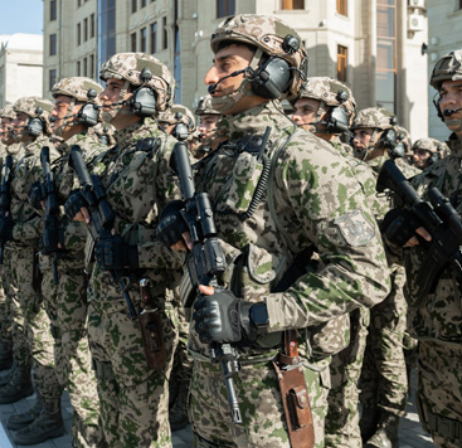
The objective is to ensure interoperability and full coordination between the Turkish Armed Forces and the Azerbaijani Armed Forces. Within this framework, joint training and advisory activities are continuously carried out in order to support the modernisation of the Azerbaijani Army, strengthen its commando brigade structures and promote doctrinal unity. Comprehensive joint exercises involving land, air and special forces are conducted regularly every year in order to maintain the operational capabilities and interoperability of the two countries’ armed forces at the highest possible level. These exercises strengthen our ability to plan and conduct joint operations while also contributing to regional deterrence.
The Shusha Declaration has further strengthened the political and strategic framework of our cooperation. We are taking our existing cooperation in defence and security—including training, advisory activities, mutual assistance and the defence industry—to even higher levels. The defence industry is also an important dimension of this partnership. An increasingly strong synergy is emerging between Türkiye’s defence industry capabilities and Azerbaijan’s requirements and experience. We regard this cooperation not merely as a mechanism responding to today’s needs, but as a partnership that strengthens the long-term strategic defence capacity of both countries. In summary, when it comes to security, solidarity between Türkiye and Azerbaijan is not a circumstantial choice for us; it is a natural consequence of our brotherhood and strategic partnership.
Our position is clear: “A strong Türkiye means a strong Azerbaijan, and a strong Azerbaijan means a strong Türkiye.” As two brotherly countries, our objective is not only to strengthen our defence and security capabilities reciprocally, but also to contribute to establishing lasting peace, stability and prosperity in the South Caucasus. We believe that the Türkiye-Azerbaijan partnership will continue to make significant contributions not only to the security of our countries but also to the peace, stability and development of our region.
What do you consider to be the most important achievements in Türkiye-Azerbaijan defence cooperation in recent years?
The defence and security partnership, which has gained significant momentum in recent years, has evolved beyond merely a preparation and infrastructure process and has reached a level that produces direct, strategic and tangible results in the field. The most important achievement we have attained in Türkiye-Azerbaijan defence cooperation is that cooperation between the armed forces of these two brotherly countries has evolved into an institutionalised, comprehensive and sustainable structure. Within this framework, we regard the significant enhancement of interoperability between our armed forces as a major achievement. Through joint exercises, training activities and personnel exchanges, the planning, command and control, and joint operational capabilities of the two armed forces have been further strengthened.
The Sarsılmaz Kardeşlik (Unshakable Brotherhood) Exercise conducted in Türkiye in 2026 aimed to enhance interoperability, while the Birliğin Gücü (The Power of Unity)-2026 Exercise hosted by Azerbaijan focused on developing capabilities for the planning and conduct of joint operations against hybrid threats.
Another important achievement has been the evolution of our defence industry cooperation towards joint production, technology sharing and R&D. The convergence of Türkiye’s defence industry capabilities with Azerbaijan’s requirements and experience generates a synergy that strengthens the national defence capacities of both countries. For this reason, we view our defence industry cooperation not merely as the supply of products or platforms, but as a long-term technology and capacity partnership.
We attach great value to the mutual experience and knowledge accumulated among our personnel. Activities conducted at various levels—from training and exercises to planning and command and control—enable our armed forces to understand each other better and continuously enhance their ability to operate together. Beyond all of these, one of the most important achievements, in my view, is that the solidarity between Türkiye and Azerbaijan in the field of security has become a lasting institutional culture. At the point we have reached today, the defence cooperation between these two brotherly countries is not limited to preparing for existing threats; it also contributes to strengthening peace, stability and security in our region.
We believe that the level of cooperation achieved between Türkiye and Azerbaijan in defence and security provides important experience and serves as an example for potential cooperation among member states of the Organization of Turkic States. We believe that this accumulated experience will contribute to enhancing mutual knowledge-sharing and interoperability across the Turkic world.
Do you see opportunities for more comprehensive cooperation between the Turkish and Azerbaijani defence industries in areas such as aviation and space, unmanned systems and advanced technologies?
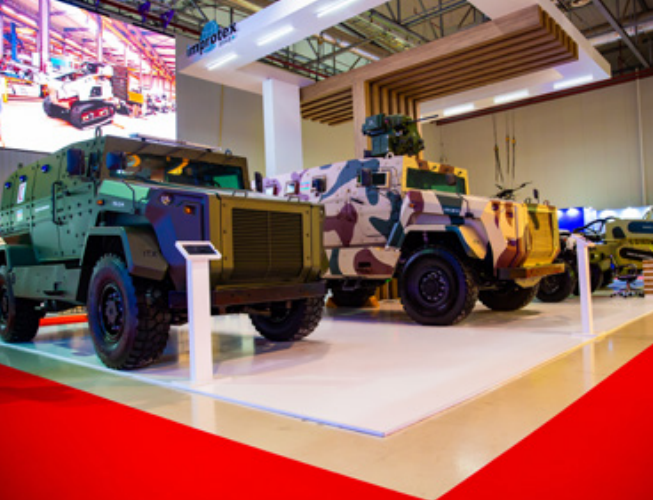
We certainly assess that there are significant opportunities for cooperation in these areas. Today, competition in the defence industry is no longer limited to platform production. Artificial intelligence, autonomy, advanced sensors, electronic warfare, satellite technologies, secure communications, data processing and cyber capabilities are becoming fundamental elements shaping the operational environment of the future. Türkiye already has strong cooperation with Azerbaijan in the defence industry. A wide range of systems, particularly various land vehicles, have been delivered to Azerbaijan by our companies. In addition, significant progress has been made in terms of working together and developing shared experience between the two countries. In the period ahead, we aim to deepen this cooperation beyond product supply, particularly in the areas of technology sharing joint production and capacity development.
In this context, we assess that there is significant potential for developing joint projects in the future’s air systems, particularly with our fifth-generation national combat aircraft KAAN and next-generation unmanned aerial platforms such as ANKA III and Bayraktar KIZILELMA. We believe that a common vision in this field will take the defence and aerospace capabilities of both countries to an even higher level.
We also regard space technologies as an important area of cooperation. We believe that Azerbaijan’s experience developed under the leadership of Azercosmos and Türkiye’s capabilities in satellite and space technologies can create new opportunities in satellite technologies, Earth observation systems, secure communications, artificial intelligence applications, and the sharing of knowledge and experience. Ultimately, our objective is to bring together Azerbaijan’s technological and human capital with Türkiye’s R&D, engineering and production capabilities, transform our existing potential into joint projects and long-term partnerships, and take our defence industry partnership to a higher level.
How does Türkiye assess the changing security environment in the South Caucasus? What role can defence cooperation play in establishing long-term stability in the region?
As Türkiye, we view developments in the South Caucasus as a period in which the region’s security architecture is being reshaped while important opportunities are simultaneously emerging for lasting peace. Following Azerbaijan’s restoration of its sovereignty over Karabakh, a new period has begun in the region. Today, our priority is to transform this historic opportunity into lasting peace, stability, economic development and regional cooperation. Together with Azerbaijan, Türkiye supports the establishment of lasting peace between Azerbaijan and Armenia and believes that the South Caucasus should be known for cooperation and prosperity rather than conflict.
Developments in the Black Sea, energy and transportation security, hybrid threats and regional geopolitical competition may directly or indirectly affect the security environment in the South Caucasus. For this reason, Türkiye conducts its security policy not merely with an approach focused on responding to existing threats, but through a comprehensive approach that strengthens deterrence, prioritises regional ownership and keeps diplomatic channels for peaceful solutions open. We attach great importance to strengthening stability in the region through the responsibility and cooperation of regional countries. Türkiye-Azerbaijan defence cooperation has an important role to play in this regard.
Relations between the two countries were elevated to the level of alliance through the Shusha Declaration, and this alliance has gained concrete expression in the field through joint exercises, military training, experience-sharing and cooperation in the defence industry. The main purpose of these activities is not to pose a threat to any country, but to strengthen the security and defence capabilities of Türkiye and Azerbaijan, enhance the interoperability of our armed forces and contribute to deterrence in the region.
Cooperation in the field of defence can make significant contributions to strengthening regional security. Cooperation in military training, joint exercises, defence industry and capacity building strengthens the security of countries while also increasing mutual trust and predictability. Security and peace are not alternatives to one another. A strong defence capability constitutes one of the security foundations of lasting peace. With this understanding, we believe that Türkiye-Azerbaijan defence cooperation supports diplomatic efforts and contributes to regional stability and deterrence.
Türkiye’s approach in this regard is clear: strong defence, effective diplomacy and regional cooperation are complementary elements. While further strengthening our cooperation with Azerbaijan based on brotherhood and alliance, we will continue contributing to the establishment of lasting peace, security and prosperity in the South Caucasus.
Türkiye’s unmanned systems are attracting significant interest around the world. What lessons has Türkiye learned from the operational use and export success of these systems?
One of the most important lessons from Türkiye’s experience in unmanned systems is that platform development and real operational experience cannot be considered separately. Our UAVs and UCAVs have been employed in different operational environments and tested under real field conditions. Feedback obtained from the field has been directly incorporated into the continuous development of these systems. In this way, operational experience gained in the field has become an important source for the development of next-generation systems.
Another important lesson is the necessity of establishing an integrated unmanned systems ecosystem rather than focusing on a single platform. Over time, Türkiye has developed not only unmanned aerial vehicles, but also complementary capabilities such as electro-optical systems, radars, munitions, communications infrastructure, electronic warfare, command and control, and artificial intelligence. This approach has transformed unmanned systems from individual platforms into components of a broader mission ecosystem encompassing intelligence, surveillance and reconnaissance, precision strike, electronic warfare and manned-unmanned teaming. Our next-generation platforms such as KIZILELMA and TB3 are important examples of this transformation.
Another important outcome demonstrated by our export success is the importance of cost-effectiveness, sustainable production capacity and developing solutions tailored to user requirements. Türkiye has established a broad product family capable of meeting the requirements of different countries by providing combat-proven systems together with their munitions, ground control and support elements. Our strengthened production infrastructure, expanding subcontractor network and qualified human resources also make significant contributions to the sustainability of this success. Ultimately, Türkiye’s experience has demonstrated the importance of rapidly transforming feedback obtained from the field into technology and new capabilities.
We do not regard exports merely as the sale of products. Rather, we view them as a process through which experience and feedback obtained from user countries contribute to the continuous development of our products. In the period ahead, our objective is to further advance an integrated unmanned systems ecosystem in which different platforms can operate together by developing autonomy, swarm technologies, artificial intelligence and manned-unmanned teaming capabilities.
What role will artificial intelligence, autonomous systems, cyber capabilities and space technologies play in Türkiye’s future defence strategy?
Türkiye regards these four areas not as independent capabilities, but as fundamental components of an integrated defence architecture that complement one another. In today’s operational environment, information and decision superiority are becoming increasingly decisive. In this context, we adopt an approach in which artificial intelligence accelerates decision-making processes while final decision-making authority remains with humans. In line with data-driven and software-defined warfare concepts, we are strengthening the digital infrastructure of the Turkish Armed Forces and continuing our efforts to ensure the effective use of artificial intelligence capabilities in various areas, particularly operations, intelligence and training.
In autonomous systems, we aim to build upon our experience with unmanned aerial vehicles and further advance it through land and naval systems, thereby enhancing the ability of manned and unmanned elements to operate together. In the cyber domain, we do not regard security as an element added to systems at a later stage; rather, we consider it an integral part of the defence architecture from the design phase onward.
By developing domestic software and national cyber security technologies, we will continue to strengthen the security of our “Cyber Homeland” and our technological independence. We also regard space technologies as one of the strategic elements of the defence architecture of the future. By developing space-based capabilities, particularly satellite communications, intelligence, surveillance and reconnaissance, and early warning, we aim to enhance the operational effectiveness and strategic autonomy of the Turkish Armed Forces.
In summary, our fundamental approach is to develop national and domestic technologies in critical areas of the future—from artificial intelligence and autonomous systems to cyber capabilities and space technologies—bring these capabilities together within an integrated architecture, and make the superiority of the Turkish Armed Forces in the operational environment of the future sustainable.
Many countries are seeking not only to procure defence products but also to establish industrial partnerships and pursue technology transfer. How does Türkiye respond to such demands?
As Türkiye, we do not regard defence industry cooperation as merely a matter of buying and selling products. Our approach is to develop long-term, sustainable partnerships based on mutual benefit. Within this framework, we consider various models, including joint production, R&D, technology sharing, training and technical cooperation. Indeed, our defence industry companies are today developing local partnerships and joint ventures with numerous countries. Naturally, in all these forms of cooperation, we comply with the relevant legislation of the countries concerned, export control regimes and security sensitivities.
Our fundamental objective is to increase our capacity to produce and develop jointly with friendly and allied countries while continuing to develop our national and domestic capabilities. Accordingly, we evaluate the requests submitted to us by taking into consideration the rights and interests of our country and within the framework of mutual benefit, and we take the necessary steps to implement appropriate models of cooperation.
Turkish defence industry companies are becoming increasingly visible at major international fairs and events. How important are these events for developing exports and strategic partnerships?
We do not regard international defence industry exhibitions merely as events where products are displayed and sales negotiations are conducted. These platforms offer important opportunities for building trust between countries and companies, identifying new areas of cooperation and establishing longterm strategic partnerships. The growing visibility of Turkish defence industry companies at these events also contributes to the international recognition of Türkiye’s technological and production capabilities. Our objective here is not merely to export more products, but to establish broader and more lasting forms of cooperation ranging from joint production and R&D to technology development, training and logistical support.
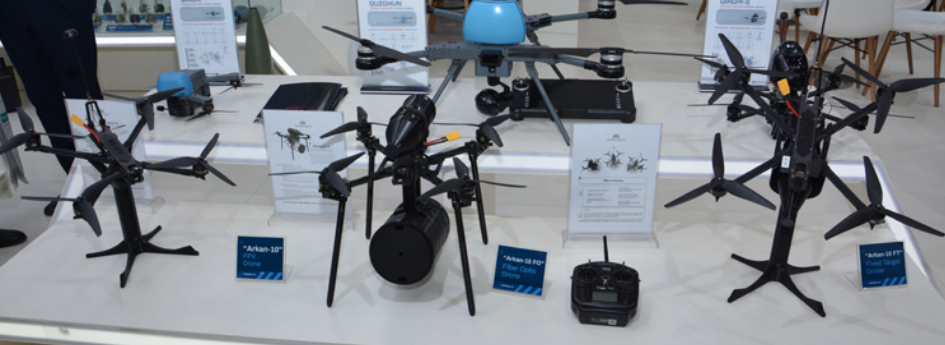
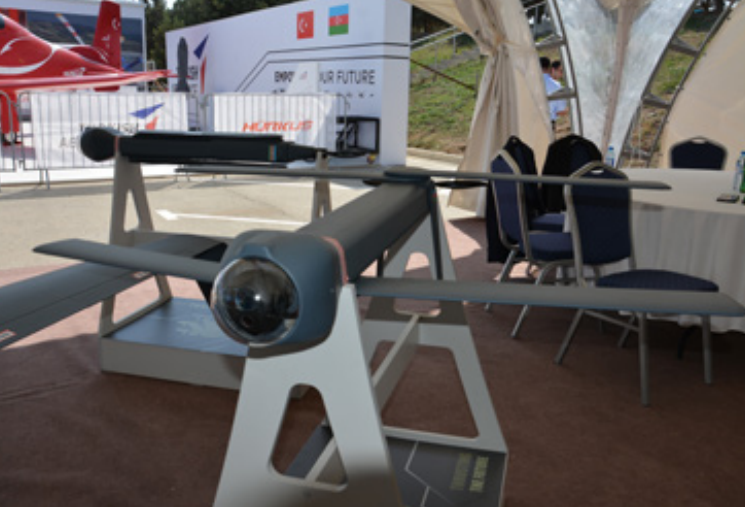
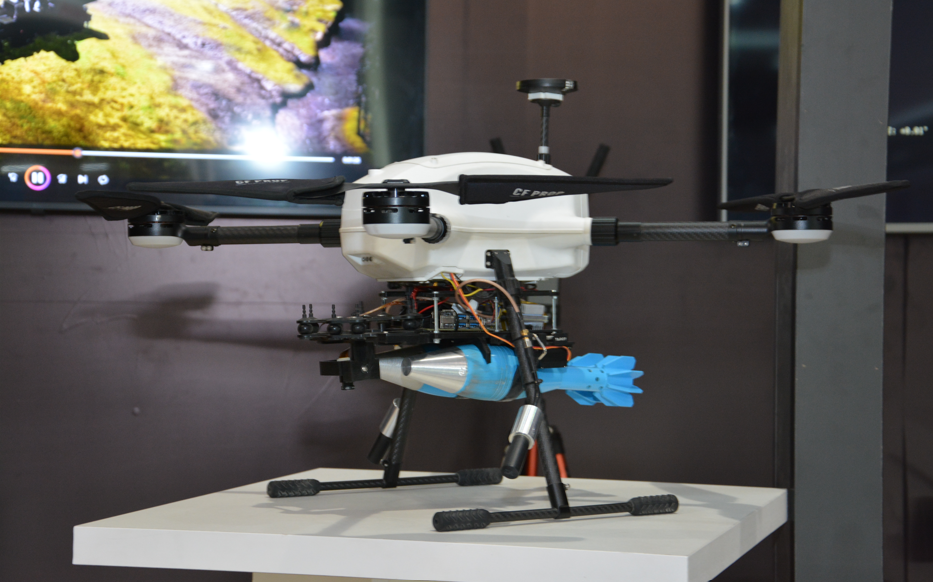
A wide range of advanced technology solutions that shape the sector—from unmanned systems to land, naval and aerospace platforms; from engines and power groups to robotic and autonomous systems; and from cyber security, artificial intelligence, electronic warfare, satellite and space technologies to the integration of domestic munitions—are showcased to the world through these exhibitions. These platforms make significant contributions to increasing the international visibility of our companies, reaching new markets and strengthening their global competitiveness.
ADEX holds a special place for us in this regard. As one of the major defence industry gatherings throughout the Caucasus, ADEX brings together international delegations and industry representatives and provides important opportunities for military-technical cooperation, joint projects and long-term strategic partnerships.
Looking towards 2035, how do you assess the position of the Turkish defence industry within the global defence and aerospace sector?
Towards 2035, the Turkish defence industry is advancing towards becoming a strong systems integrator capable of developing platforms, sensors and weapon systems within an integrated architecture by further advancing its existing capabilities in platform development and production. This systems integration capability will be one of the key factors determining Türkiye’s global position. One of the most important factors distinguishing Türkiye today is that its systems have been proven in the field. Operational experience gained through unmanned aerial vehicles, naval platforms, air defence systems and smart munitions has enhanced the credibility of these products in global markets.
Cost-effectiveness, rapid delivery and openness to technology sharing have positioned Türkiye as a preferred partner for countries seeking to establish their own defence industries. With regard to our 2035 objectives, developing national capabilities in critical technologies and further strengthening our technological independence are of great importance. Our platform projects, particularly KAAN and HÜRJET, together with our national engine development programmes, constitute important elements of this objective.
Another important dimension of this vision is our capabilities in the space domain. By 2035, we aim to develop capabilities that will contribute to establishing a comprehensive space picture within the framework of Intelligence, Surveillance and Reconnaissance; Electronic Support; Warning and Alert; Regional Positioning and Timing satellite systems; and Space Situational Awareness. We also aim to ensure that our defence industry reaches a level capable of meeting the requirements of the Turkish Armed Forces in this field.
In conclusion, our objective is to further strengthen the position of the Turkish defence industry within the global defence and aerospace sector towards 2035, advance our independence in critical technologies, and enhance our effectiveness in international markets as a reliable and sustainable partner for cooperation.